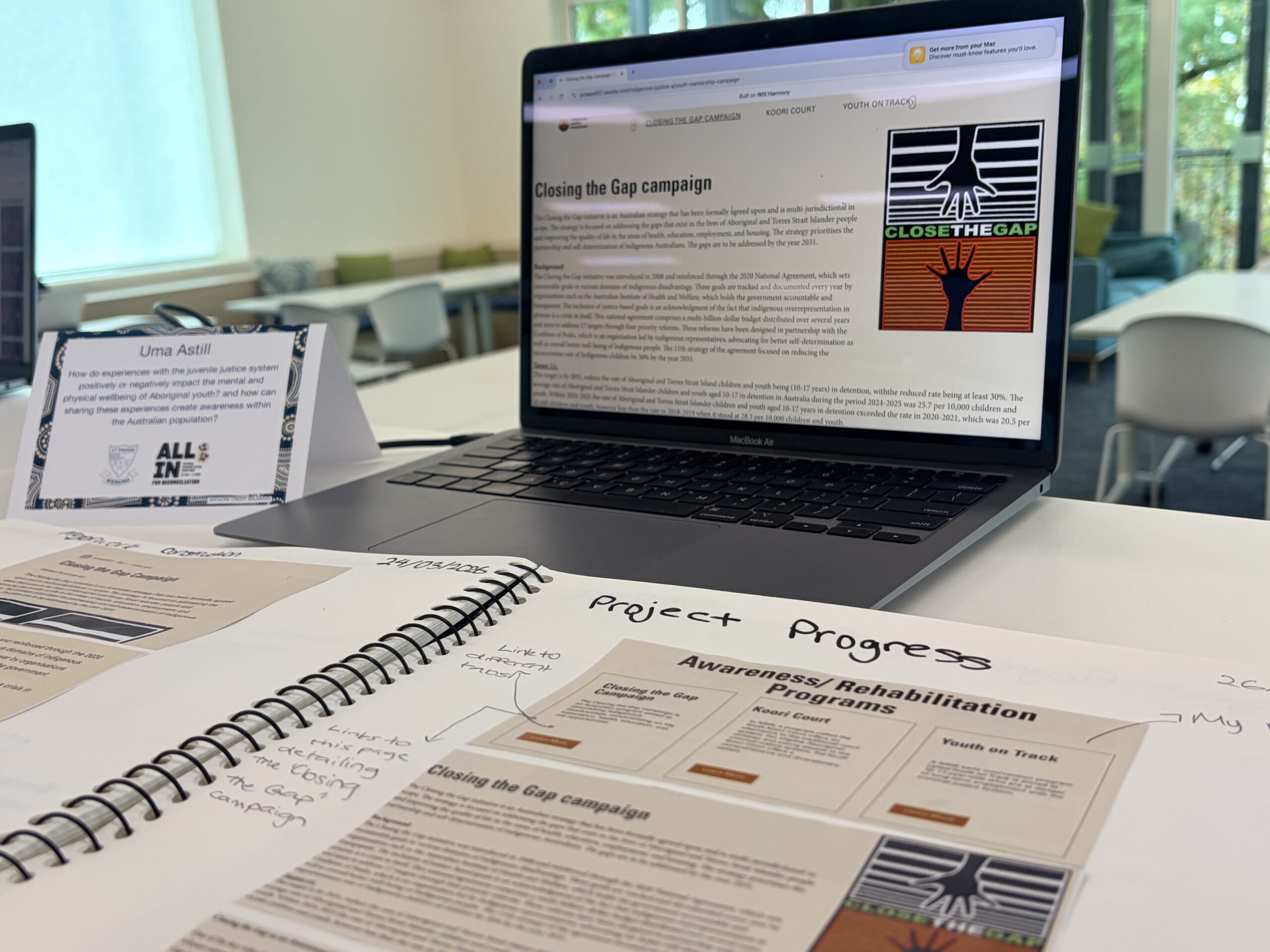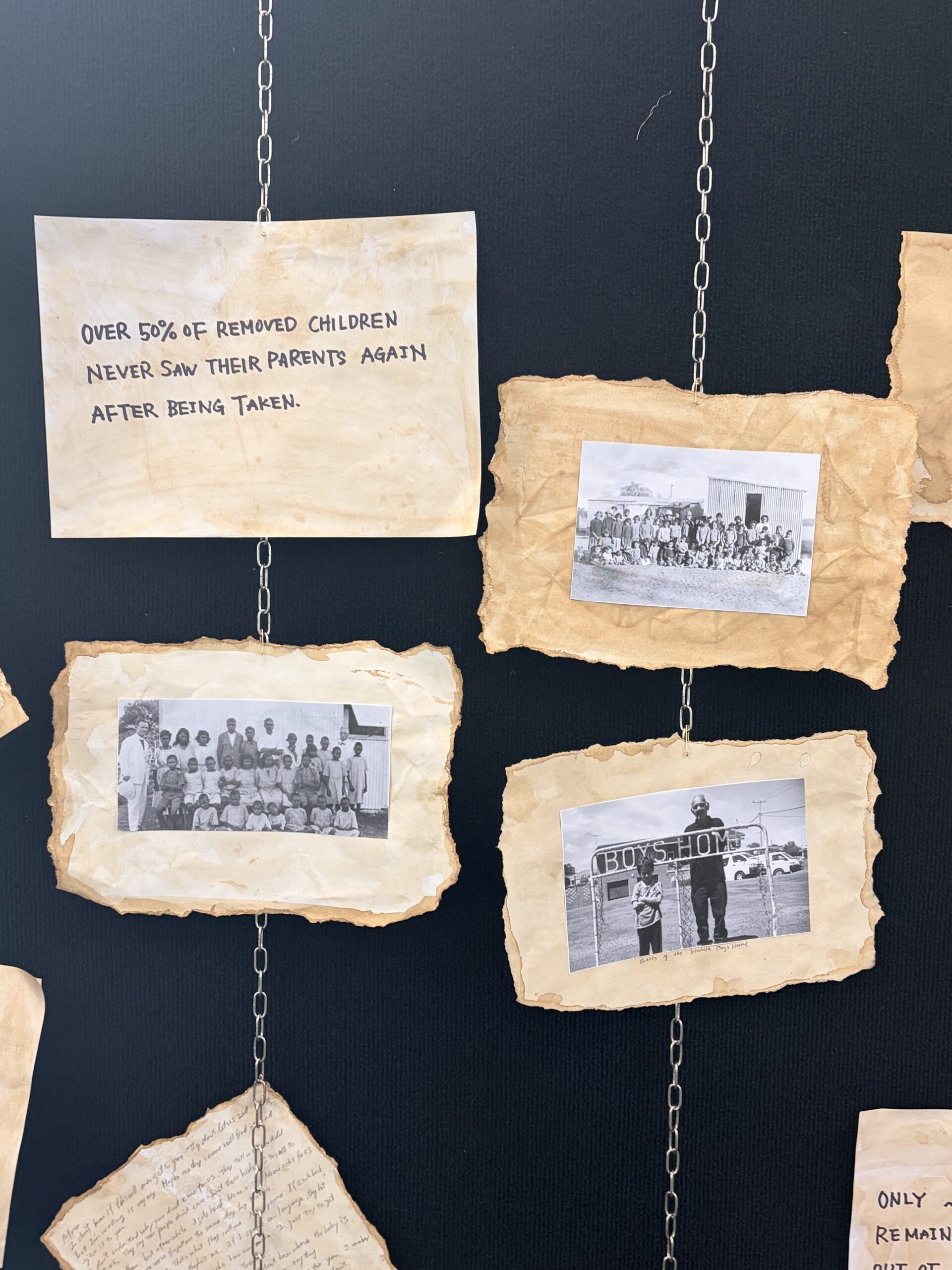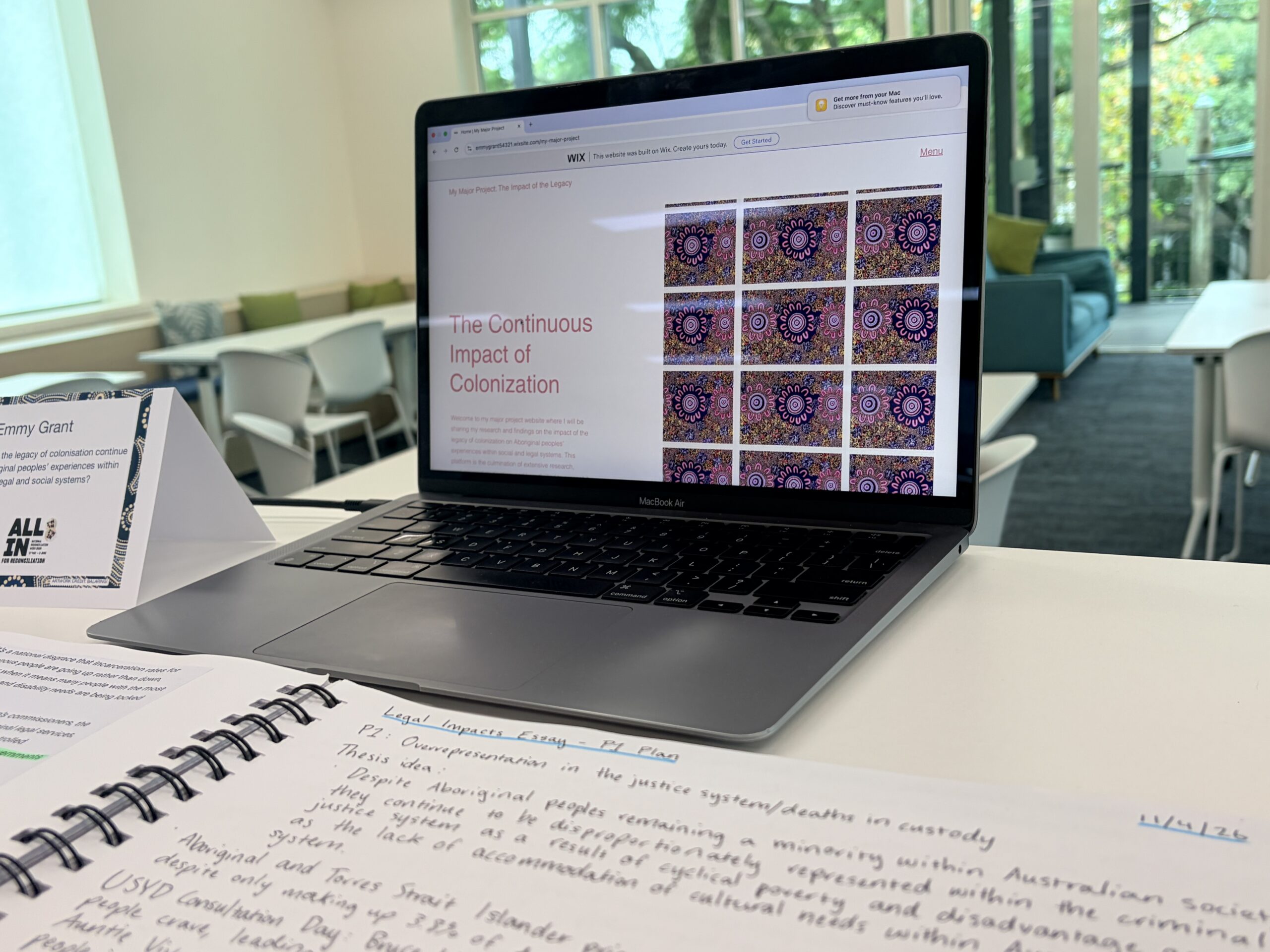
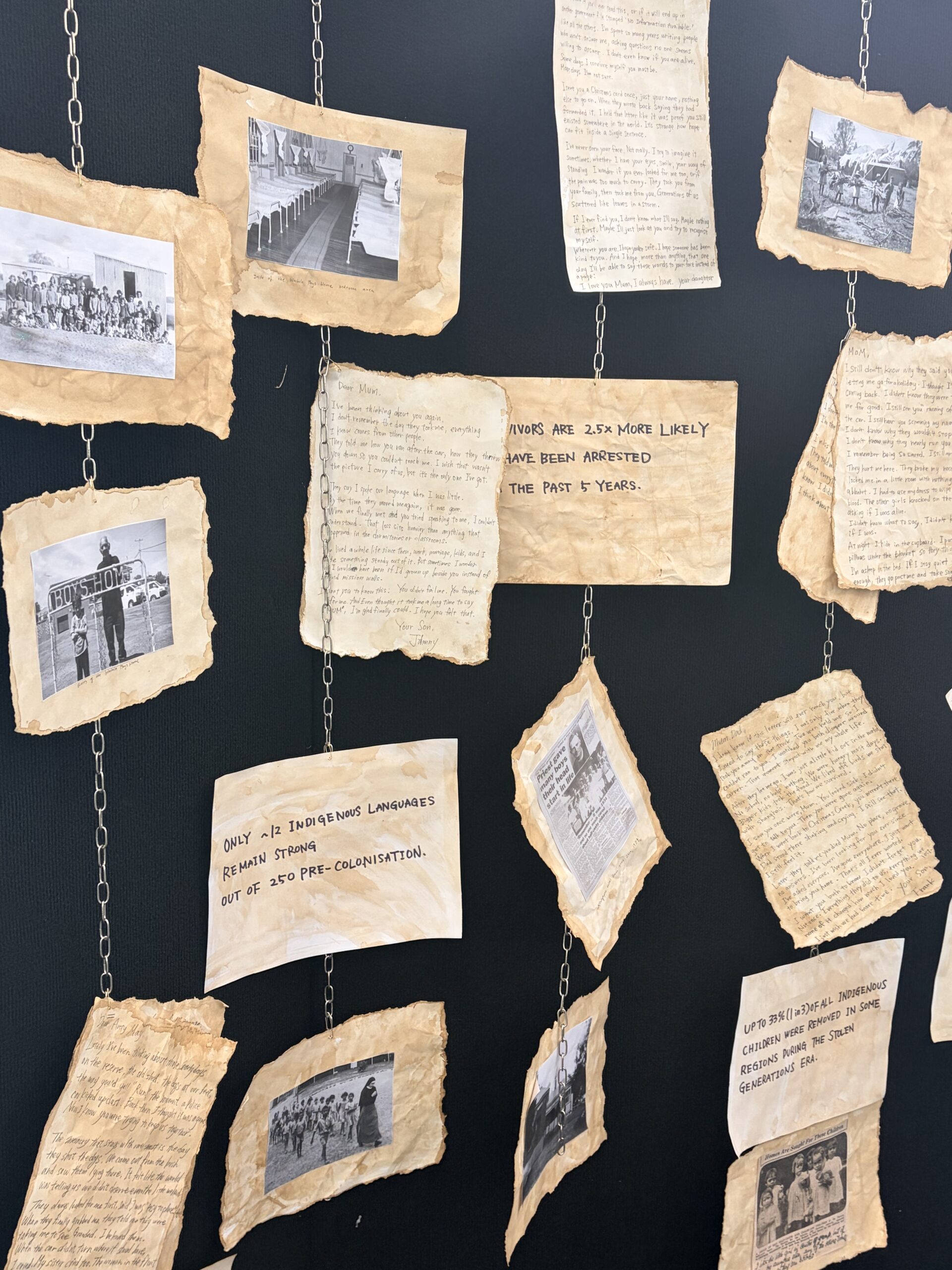
Year 12 students undertaking the Aboriginal Studies Major Project choose a question of their own, develop it with their teacher and appropriate Aboriginal community members, and build an original piece of work in response. This year’s projects demonstrate exceptional listening and care. They are on display in the Wenona Library throughout Reconciliation Week.
Before Natsume sat down to work on her Aboriginal Studies Major Project, she met with and listened deeply to a revered Uncle from the Kinchela Boys Home, who survived being taken from his home and family as a member of the Stolen Generations.
Though students draw on published sources for background, meaningful consultation with the Aboriginal community is core to the Major Project process. What the girls produced is impressive, as is the care and originality they brought to their subjects.
Genevieve asked how studying Indigenous spiritualities might broaden Western psychological theories of meaning and the human mind, consulting two Aboriginal educators, an Inuk educator, and a Māori university professor. Ines looked at how Aboriginal cultural knowledge could shape architectural design, and presented a 3D model of an educational centre for a rural community. Sophia wrote a magazine-style research article, Perspective, on the link between cultural exclusion in schools and later contact with the justice system.
The formats ranged widely. Elena plotted the evolution of Aboriginal activism since 1960 onto an interactive map, pinning landmark moments such as the Yirrkala Bark Petitions to the places they happened. Olivia and Emmy each built educational resources tracing the legacy of government policy, from Protection and Assimilation through to the National Apology and Closing the Gap. Isobel designed a website of classroom resources to help primary teachers teach Aboriginal history and culture accurately and with confidence.
Several students secured remarkable access. Taylah, whose project Beyond the Game examines the experiences of Indigenous athletes, interviewed Marcia Ella-Duncan, the first Indigenous woman to play international netball for Australia. Uma built her project on the juvenile justice system around the conviction that an affected community’s experience can only be represented honestly by those willing to listen to it. In addition to the Kinchela Boys Home Corporation, Aboriginal community participants included the Cootamundra Girls Home Foundation and the Gujaga Foundation, along with friend of Wenona, Aunty Viv Freeman, who has a long history of contribution with the charity Barnardos.
What links the projects is a refusal to file history away as something that “just happened back then”. As Natsume says, her aim was “to spread awareness by highlighting individual stories and crucial details that are often lost in over-generalised teachings”.
It is demanding work requiring research and creativity as well as the patience to consult properly before drawing a conclusion. The students’ projects do real justice to the people and histories behind them.