Boarding at Wenona stretches back to around 1893, when the Hooke family moved into Woodstock, a four-decade-old stone house located where the North Sydney Council Chambers now stands.
When the School relocated to West Street in 1901, rooms upstairs were given over to boarders. By 1905, around 15 boarders were in residence – so many that the Hooke family had rented the house next door to fit them all.
Boarding paused in late 1912, when Miss Hooke decided Woodstock would continue as a day school only, and resumed a decade later in 1922.
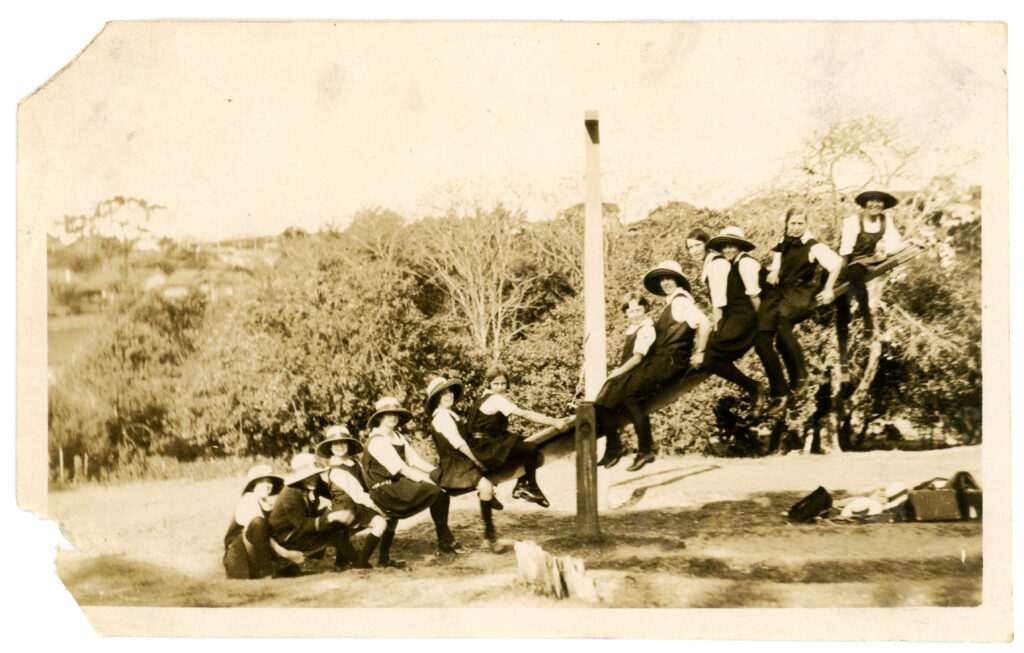
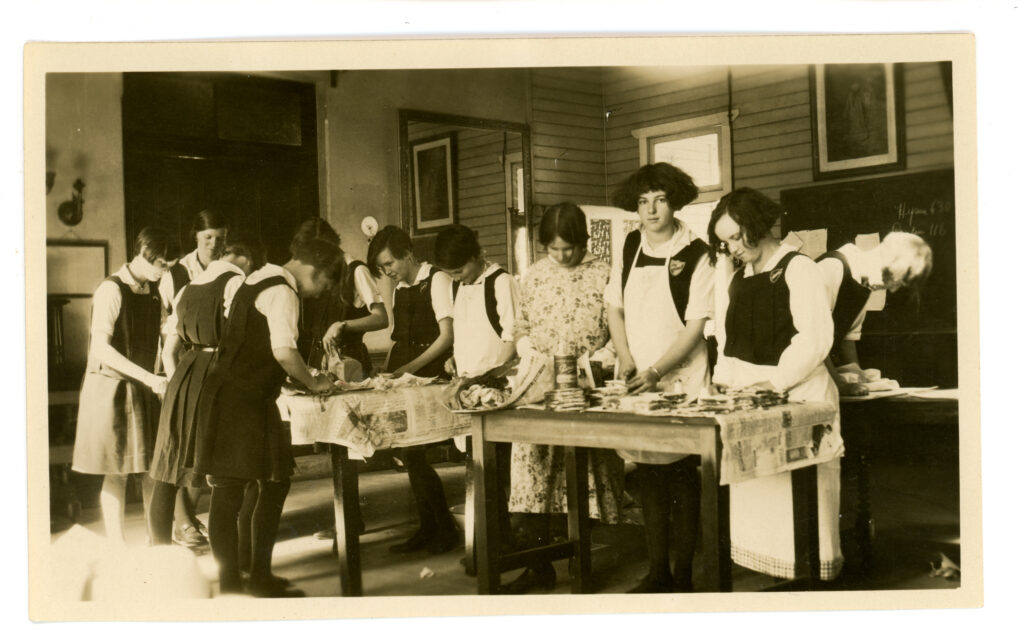
The years that followed brought some practices that would raise eyebrows today. Throughout the 1920s, every boarder’s throat was sprayed nightly with kerosene as a health precaution. As one girl recorded in Woodstock Magazine: “It was quite amusing to see everyone take their turn and open their mouths for the kerosene, but some of the faces did not show so much amusement as the onlookers.”
The boarders had a way of being present at history. On 28 July, 1923, they walked down to Kirribilli to watch the turning of the first sod for what was then known as the “North Shore Bridge”. Nine years later, in March 1932, they were back to see the Sydney Harbour Bridge officially open.
Numbers continued to grow, reaching 43 by 1936 – a year also remembered for a large chickenpox outbreak.
The 1940s brought the Second World War, and a remarkable shift in the face of boarding life. After the Japanese submarine attack on Sydney Harbour, trips to the opera, ballet and zoo were replaced by quieter local activities. Boarders helped excavate the School’s own air-raid shelters. Allard House opened as a new dormitory during these years. When peace finally came, the girls marked the moment by banging on garbage tins and gathering for a Thanksgiving service on the tennis court.
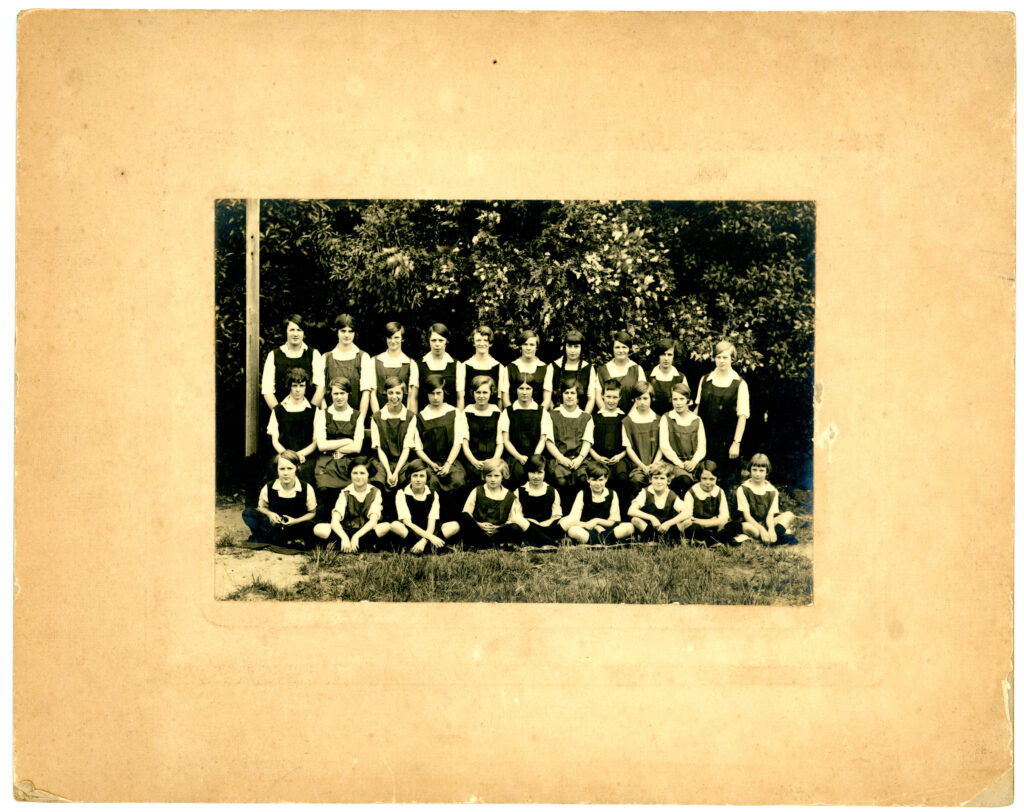
What is striking, as you read through the boarders’ own words across the decades, is how recognisable they remain. The humour, the wry observations of School life, the appetite for adventure, and the sense of belonging are all still true today. Take this lament from an anonymous boarder in 1936, written under the title Monkey Mornings:
We woke, the sky was dull and grey,
“Alas!” we said, “another day,”
The rain came down, a solid wall,
“Froghops” in the Assembly Hall.
With thanks to Dr Elizabeth Hartnell, School Archivist, for the research behind this article.